

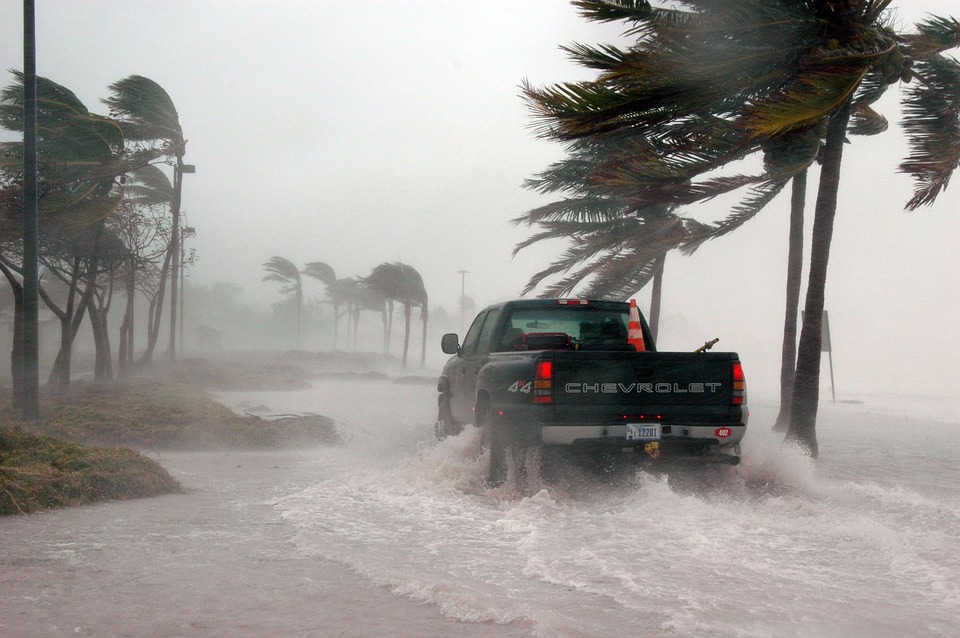
Hurricane Irma victims in parts of Florida and elsewhere have until Jan. 31, 2018, to file certain individual and business tax returns and make certain tax payments.
The relief parallels that granted last month to victims of Hurricane Harvey. This includes an additional filing extension for taxpayers with valid extensions that run out on Oct. 16, and businesses with extensions that run out on Sept. 15.
The IRS is offering this relief to any area designated by the Federal Emergency Management Agency (FEMA), as qualifying for individual assistance. Parts of Florida, Puerto Rico and the Virgin Islands are currently eligible, but taxpayers in localities added later to the disaster area, including those in other states, will automatically receive the same filing and payment relief. The current list of eligible localities is always available on the disaster relief page on IRS.gov.
So far, the IRS filing and payment relief applies to the following localities identified by FEMA for Individual Assistance due to Hurricane Irma:
In U.S. Virgin Islands: The islands of St. John and St. Thomas.
In Puerto Rico: The municipalities of Culebra and Vieques.
In Florida: Broward, Charlotte, Clay, Collier, Duval, Flagler, Hillsborough, Lee, Manatee, Miami-Dade, Monroe, Palm Beach, Pinellas, Putnam, Sarasota and St. Johns Counties.
The tax relief postpones various tax filing and payment deadlines that occurred starting on Sept. 4, 2017 in Florida and Sept. 5, 2017 in Puerto Rico and the Virgin Islands. As a result, affected individuals and businesses will have until Jan. 31, 2018, to file returns and pay any taxes that were originally due during this period.
This includes the Sept. 15, 2017 and Jan. 16, 2018 deadlines for making quarterly estimated tax payments. For individual tax filers, it also includes 2016 income tax returns that received a tax-filing extension until Oct. 16, 2017. The IRS noted, however, that because tax payments related to these 2016 returns were originally due on April 18, 2017, those payments are not eligible for this relief.
A variety of business tax deadlines are also affected including the Oct. 31 deadline for quarterly payroll and excise tax returns. Businesses with extensions also have the additional time including, among others, calendar-year partnerships whose 2016 extensions run out on Sept. 15, 2017 and calendar-year tax-exempt organizations whose 2016 extensions run out on Nov. 15, 2017. The disaster relief page has details on other returns, payments and tax-related actions qualifying for the additional time.
In addition, the IRS is waiving late-deposit penalties for federal payroll and excise tax deposits normally due during the first 15 days of the disaster period. Check out the disaster relief page for the time periods that apply to each jurisdiction.
The IRS automatically provides filing and penalty relief to any taxpayer with an IRS address of record located in the disaster area. Thus, taxpayers need not contact the IRS to get this relief.
However, if an affected taxpayer receives a late filing or late payment penalty notice from the IRS that has an original or extended filing, payment or deposit due date falling within the postponement period, the taxpayer should call the number on the notice to have the penalty abated.
In addition, the IRS will work with any taxpayer who lives outside the disaster area but whose records necessary to meet a deadline occurring during the postponement period are located in the affected area. Taxpayers qualifying for relief who live outside the disaster area need to contact the IRS at 866-562-5227. This also includes workers assisting the relief activities who are affiliated with a recognized government or philanthropic organization.
Individuals and businesses who suffered uninsured or unreimbursed disaster-related losses can choose to claim them on either the return for the year the loss occurred (in this instance, the 2017 return normally filed next year), or the return for the prior year (2016).